Jobsite Marketing: How to Turn Every Jobs Into Two More Jobs Down the Block
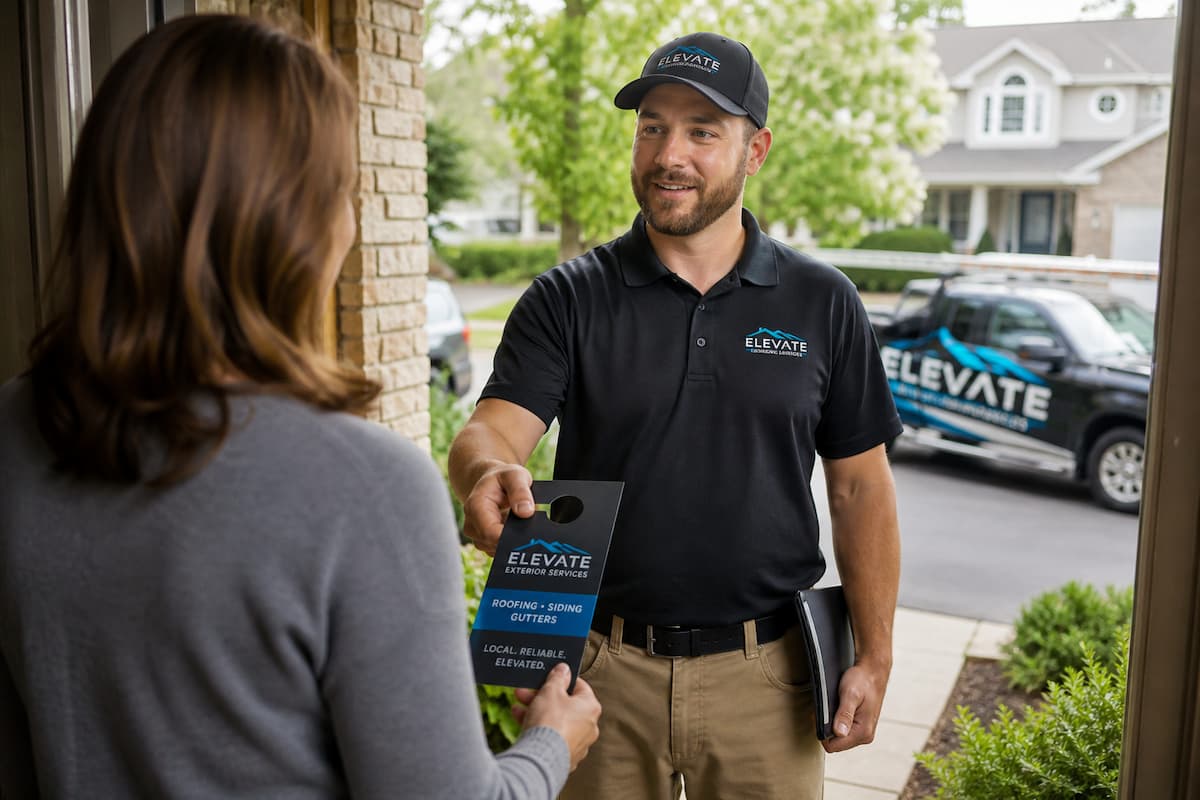


Every active jobsite is a billboard. Your truck is parked at the curb. Your crew is wearing your logo. The dumpster is in the driveway. The whole street is watching, whether they admit it or not.
Most contractors miss this. They show up, do clean work, pack up, and leave. The only marketing that happened was an accident. That is money on the table - because the homeowners closest to your job are the easiest leads you will ever earn. They have the same kind of house. They have the same kind of problems. And they just watched a real crew do real work next door. This is jobsite marketing - the deliberate work of turning every project into a small marketing event. Done right, it can bring in two to five extra leads per job with almost no extra ad spend.
What Is Jobsite Marketing for Contractors?
Jobsite marketing is the practice of deliberately using your active work sites - your trucks, crew, yard signs, and proximity to neighbors - to generate leads and visibility without additional ad spend. Instead of letting a job come and go quietly, you treat every project as a local marketing event that can produce two to five additional leads from the surrounding block.
Why the Jobsite Works So Well
Three things are working in your favor the second you pull up.
The first is proximity. The best sign that a homeowner needs your service is that the neighbor just needed it. Trees fall in the same storms. Sewer lines age out the same year. HVAC systems get installed in the same decade by the same builder. When you replace a water heater on one block, the rest of that block is on borrowed time.
The second is trust. Online ads start cold. A jobsite does not. Your truck has been parked there for two days. The neighbors waved at the homeowner across the lawn. You are not a stranger anymore - you are the company that did the Wilsons' kitchen.
The third is timing. People rarely buy a roof because an ad told them to. They buy it when something nudges them to look up at their own roof. Your jobsite is that nudge. Let's talk about how to make the most of it.
1. Yard Signs That Actually Do Their Job
Yard signs are the bread and butter of jobsite marketing. Most are still wasted. They are too small, too wordy, and they say the same thing every competitor says: company name, phone number, "Quality You Can Trust."
A good yard sign passes the three-second drive-by test. From across the street, in three seconds, a homeowner should be able to read three things: what you do, that you are working close by, and how to act on it.
Drop the tagline. Use the service. "New Roof Installed Here" beats "Excellence Since 1987" every time. Add a QR code that goes to a short estimate form - not your homepage. Then ask the homeowner if you can leave the sign up for two more weeks after the job. That is when the neighborhood talk starts.
If you need a sign supplier, Footbridge Marketing sells branded yard signs and door hangers at trade pricing. You can have new signs on your trucks in a week.
2. The 10-Around Drop
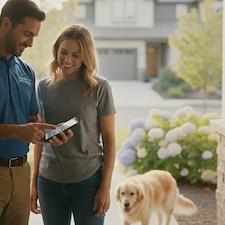
Before the saws come on, somebody walks the block. Five houses on each side. Both sides of the street. Plus the homes right behind. That is your 10-around.
Each house gets a door hanger. The wording matters. Try this: "Your neighbor at 412 Maple chose us to replace their roof this week. We will be on-site Monday through Wednesday. While we are in the area, we are offering free roof inspections to nearby homes. No pressure. No upsell."
Two things make this work. First, naming the address (with the homeowner's okay) makes it real. Second, the "while we are in the area" line creates soft urgency without sounding like a pitch. Contractors who do this well book one to three estimates for every twenty hangers they drop. That is better math than most paid channels.
If you haven't ordered print materials before for your business, and you want to get an understand for what print quality should look and feel like. We can give you some free print marketing examples for you to actually hold in your hand - so you can see what quality you can expect for your first product order.
One to three booked estimates for every twenty door hangers dropped. That is better ROI than most paid ad channels - and it costs almost nothing.
3. Vehicles and Uniforms Are Mobile Billboards
Your truck is parked there for hours. Make it work for you. A clean wrap with your service, phone number, and website is the floor. The upgrade is a magnet on the side that reads "Currently working at this address. Ask about neighbor pricing."
Uniforms matter just as much. Three crew members in matching branded shirts read as a real company. Three guys in random t-shirts read as two guys and a Craigslist ad - even if the work is great. That is unfair. It is also true.
4. Make Photos and Video Part of Every Job
Every project should make content. This is not a glamour shoot. It is a five-minute job your foreman handles, and it gives you raw material for a month of marketing.
The basic kit looks like this: a wide before shot, a tight before shot of the problem, a few mid-job photos with the crew working, and the wide and tight after shots. Round it out with a short walk-through video where the foreman or homeowner says what was done.
Build it into your job-close checklist. If photos are required to close a job in your CRM, they get taken. If they are only encouraged, they do not.
Those photos feed three places: your Google Business Profile, your website through individual project posts, and your social channels where past customers and their friends keep seeing your work. A strong contractor website makes that project content work even harder for you.
5. Post Every Job to Google Business Profile
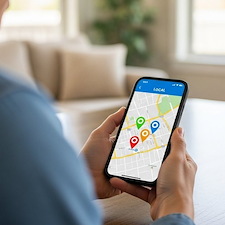
Every time you finish a job in a specific town, post about it on your Google Business Profile. Include the city, the service, two or three photos, and a short description.
Google's rewards businesses that show active work in real locations. It is free, it takes ten minutes, and it helps with engagement with your Google Business Profile.
If you want to understand more about how local SEO signals stack up, NAP consistency is another piece of the puzzle that works alongside regular GBP activity.
6. Get the Review on the Jobsite, Not by Email
The biggest leak in most contractors' review pipelines is the gap between the last day of the job and the follow-up email two days later. By then the homeowner is back to their life. The moment is gone.
Fix it on-site. Before the crew leaves, the lead hands the homeowner a small printed card with a QR code that goes straight to the Google review form. They explain, in one sentence, that reviews are how the team gets recognized. Most homeowners will pull out their phone right there.
Contractors who switch from email-based asks to on-site asks routinely double or triple their review count in 60 days. More recent reviews mean more map pack visibility, which means more calls. For more on how to build this habit, check out our guide on asking for the review.
Make It a System, Not a Side Project
Jobsite marketing falls apart when it lives in someone's head. It works when it is built into the job itself - before, during, and after - with checklists, supplies in the truck, and someone on the hook for whether each step actually happened.
Stock every truck with a jobsite marketing kit:
- Yard signs (already staked and ready to go)
- Door hangers for the 10-around drop
- Printed review cards with the QR code to your Google review form
- A charged phone with the camera ready and QR codes laminated
Add four line items to your job-close checklist: photos uploaded, Google Business Profile post drafted, review asked for on-site, and yard sign placement confirmed.
Then review that checklist every Friday, the same way you review safety or quality. If a job closed without those four boxes checked, it is not really closed.
If a job closed without those four boxes checked, it is not really closed.
The Bottom Line
Most contractors think they need more leads. A lot of the time, they just need to squeeze more out of the leads they already have working their way. Every active jobsite is already paid for. The truck is there. The crew is there. The homeowner is happy. The neighbors are watching.
You are sitting on the cheapest marketing channel you will ever own. You just have to pick it up.
The contractors who win their local market over the next five years will not be the ones with the biggest ad budgets. They will be the ones who treat every active jobsite as the asset it already is - and quietly stack an extra two to five leads off every project while their competitors keep paying for clicks. Your next job is also your next campaign. Run it like one.
Get A Contractor Marketing System, Built Just For Home Service Pros Like You
Frequently Asked Questions
Jobsite marketing is the practice of using your active work sites to generate additional leads and local visibility. Instead of just completing a project and leaving, you use yard signs, door hangers, vehicle branding, photos, and Google Business Profile posts to market to the surrounding neighborhood - the people most likely to need the same service you just completed next door.
The "10-around" approach works well as a baseline - five houses on each side of the street, plus the homes directly behind the jobsite. For larger projects or neighborhoods with high potential, you can expand the radius. Contractors who use this method consistently report booking one to three estimates for every twenty door hangers distributed.
The most effective method is asking on-site before your crew leaves, not by follow-up email days later. Hand the homeowner a printed card with a QR code that links directly to your Google review form, and have your crew lead explain that reviews help the team get recognized. Contractors who shift from email follow-ups to on-site asks regularly see their review count double or triple within 60 days.
A basic jobsite marketing kit should include yard signs ready to stake, door hangers for the surrounding neighborhood, laminated review cards with a QR code linking to your Google review form, and a charged phone with the camera ready. The goal is to have everything on the truck so no one has to think about it - the process just runs as part of the job.


About Aaron O'Hanlon
Aaron O'Hanlon is the CEO and Co-Founder of Footbridge Media, a digital marketing agency, specializing in the contracting industry. It is his mission to create awareness of marketing online to the home improvement industry and to educate, inform, and assist contractors in taking over their own online presence.