The Rules of Google Local Service Ads Just Changed. Most Contractors Missed It.
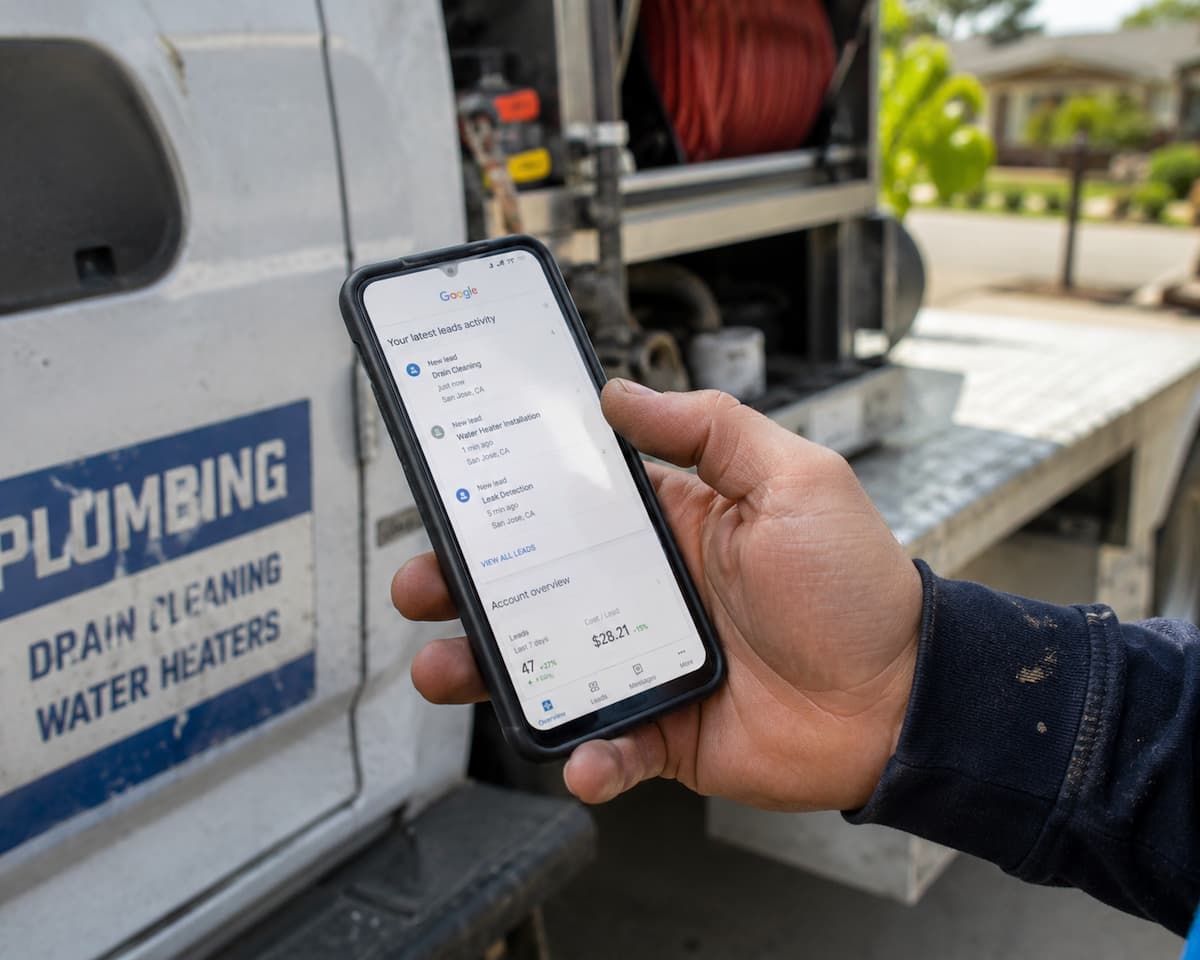


The Google Local Service Ads platform you set up two years ago is not the platform you're running today. Google changed the rules five times between July 2024 and November 2025. Most contractors missed every one of them.
The changes were quiet. No email blast. No big announcement. Just a help doc updated on a Tuesday and a new badge that shows up on your profile one morning. Then the bill keeps coming. The leads keep coming. You assume everything is the same.
It isn't. Here's what shifted, what it's already costing contractors, and what to do about it before another quarter slips by.
What Changed With Google Local Service Ads?
Google made five significant changes to the Local Service Ads platform between July 2024 and November 2025. Manual lead disputes were eliminated and replaced by an automated credit system. Two major credit categories — "job type not serviced" and "geo not serviced" — were cut entirely. The standalone mobile app was retired. All three badge types were consolidated into a single Google Verified badge. And the $2,000 customer money-back guarantee that came with the Google Guaranteed badge was removed. Each change shifted more responsibility and financial risk onto the contractor's side of the account.
The five changes that hit LSAs
July 2024. Manual lead disputes were killed.
If you spotted a bad lead and wanted your money back, you used to be able to dispute it in your account. That button is gone. Google now uses an automated system that decides for you. It looks at every charged lead within 72 hours and applies a credit if its machine learning thinks the lead was junk.
The catch is you no longer get to argue. You can rate a lead "Very dissatisfied" inside the Leads tab, and that is the only signal that nudges the system to take another look. Some contractors get credits. Some don't. Nobody at Google will tell you why.
Early 2025. Two big credit categories were cut.
Google stopped issuing credits for "job type not serviced" and "geo not serviced" leads. That sounds like jargon. Here's what it means in your pocket.
If a homeowner calls you for a job you don't do, you used to get that money back. Now you don't. If a homeowner calls from a town you don't serve, same story. You pay for it. The fix is on your end. Your service list and service area inside your LSA account have to match what you actually do, exactly. If they don't, you fund every wrong-number lead.
January 6, 2025. The LSA mobile app was retired.
You used to manage your LSA leads in a standalone app on your phone. That app is gone. All lead management now lives inside the Google Ads dashboard at ads.google.com/localservices. If you were one of the contractors who answered LSA leads from a job site through the old app, you woke up to a different workflow with no warning.
October 20, 2025. The Google Guaranteed badge was replaced.
The familiar green Google Guaranteed shield is gone. So are the Google Screened and License Verified badges. All three were folded into one new badge called Google Verified. If your business already had one of the old badges, your account swapped over automatically.
November 7, 2025. The money-back guarantee was killed.
This one matters most. The old Google Guaranteed badge came with a $2,000 customer money-back guarantee. Google would refund up to two grand to a homeowner who was unhappy with a job booked through LSA. That guarantee is no longer offered.
The badge still says you've been vetted. The financial backing behind it does not exist anymore.
The badge still says you've been vetted. The financial backing behind it does not exist anymore.
What this is actually costing contractors
Here's the thing. Each one of these changes sounds small on its own. Stacked together, they shift who wins and who pays.
A contractor running $5,000 a month in LSA spend usually has 15 to 25 percent of their leads in a category that used to be credit-eligible. That's $750 to $1,250 a month, more than $10,000 a year, that quietly drops to the floor because nobody reviews the lead log weekly and rates the bad ones.
Cost per lead across home services now averages $53. Plumbing runs about $57. HVAC sits around $51. Roofing climbs to $55 to $95, and storm seasons push it past $150. The book rate on a paying customer is 43.9 percent, and the cost per paying customer averages $233. None of that is bad math for the right shop. It only works if you stop the easy leaks.
And the trust math just changed. Homeowners who used to feel safe booking through LSA because Google had two grand on the line are now booking through a blue checkmark that means "we checked his license." Your reviews, your photos, and how fast you call back are doing more of the heavy lifting than they did a year ago.
What to do this month
Four things go on the calendar this month.
Tighten your service area and service list. Open your account. Look at the zip codes you cover. Cut the ones you don't actually work. Look at the services you've checked off. Take off anything you would turn down on a phone call. This stops you from paying for "geo not serviced" and "job type not serviced" leads that no longer earn credits.
Review your leads every Monday. Open the Leads tab. Listen to the calls or read the messages from the past seven days. Anything that was clearly spam, a wrong number, a duplicate, or a person looking for something you don't do gets rated "Very dissatisfied." That is the only signal that triggers Google's automated credit review. If you don't do this, you are not getting back the money you are owed.
Push for fresh reviews, not just more reviews. Recency carries a lot of weight in LSA ranking. A contractor with 60 reviews averaging 4.7 stars beats a contractor with 12 reviews averaging 4.9 stars. Send a review request text within two hours of the job being done. That window has the highest response rate. Use a direct Google review link, not a generic landing page. Getting the review mechanics right matters as much as asking at all.
Answer the phone in five minutes or less. Google tracks your response rate and uses it as a ranking signal. Responding inside five minutes makes you about 8x more likely to convert the lead. Every missed call hurts twice. You lose that job, and your ranking drops for the next one. Missed calls are one of the most common ways contractors bleed leads they already paid for.
Update your marketing copy. If your website, sales scripts, vehicle wraps, or print pieces still say "Google Guaranteed," change them to "Google Verified." Anything you put in print after November 2025 that claims a money-back guarantee through Google is now inaccurate, and it can put you in front of the wrong kind of customer complaint.
The bigger picture
LSAs still work for home service contractors. The conversion rate on LSA leads is around 31 percent, where traditional Google Ads sit closer to 12 percent. The reason LSAs convert higher is that the homeowner who calls already knows you've been vetted, they're seeing your reviews up top, and they're picking from a short list. That part hasn't changed.
What changed is that the platform now rewards the contractor who pays attention. The ones who read the help docs, prune their service area, dispute every bad lead, and keep reviews fresh are pulling away from the ones who set up an account in 2022 and never touched it again.
If you're running LSAs and you can't tell me your cost per booked job, your weekly credit count, or your average response time, your account is leaking money. That's the part of the business most contractors don't have time to learn this week, this month, or this quarter.
Let's stop the leak
That's where Footbridge comes in. We manage Local Service Ads for contractors for $149 a month with no contracts. We tighten the settings, give feedback on bad leads, and tell you each month exactly what every dollar bought.
If you want to know whether your current setup is helping you or hurting you, let's talk.
See How Footbridge Media Gives You More Leads For Less $$$
Frequently Asked Questions
As of July 2024, the manual lead dispute button is gone. Google replaced it with an automated credit system that reviews every charged lead within 72 hours. The only action available to contractors is rating a lead "Very dissatisfied" in the Leads tab — that rating is the signal that prompts a second review. If you don't rate bad leads regularly, you will not recover credits you're owed.
As of October 20, 2025, Google consolidated the Google Guaranteed, Google Screened, and License Verified badges into a single Google Verified badge. Businesses with existing badges were migrated automatically. The critical difference: the old Google Guaranteed badge came with a $2,000 customer money-back guarantee. That guarantee was eliminated on November 7, 2025. The Google Verified badge still signals that your business has been vetted, but there is no longer any financial backing from Google behind it.
In early 2025, Google eliminated credits for two categories: "geo not serviced" (calls from outside your service area) and "job type not serviced" (calls for work you don't do). These categories used to be refundable. Now they're not. The only protection is keeping your service area and service list tightly configured inside your LSA account so wrong-number leads stop coming in the first place.
Yes — LSA conversion rates for home service contractors run around 31 percent compared to roughly 12 percent for traditional Google Ads. The platform still works because homeowners arrive pre-qualified and ready to contact a vetted business. What's changed is that the platform now rewards contractors who actively manage their accounts. Tight service settings, weekly lead review, consistent review generation, and fast response time are no longer optional — they're what separates profitable LSA accounts from ones that leak money.
The standalone LSA mobile app was retired on January 6, 2025. All lead management now happens inside the Google Ads dashboard at ads.google.com/localservices. There is no separate app — everything from reviewing leads and rating calls to managing account settings lives within the Google Ads platform.


About Aaron O'Hanlon
Aaron O'Hanlon is the CEO and Co-Founder of Footbridge Media, a digital marketing agency, specializing in the contracting industry. It is his mission to create awareness of marketing online to the home improvement industry and to educate, inform, and assist contractors in taking over their own online presence.