Why Most Contractors Won't Touch YouTube (and Why That's the Opening for the Ones Who Will)
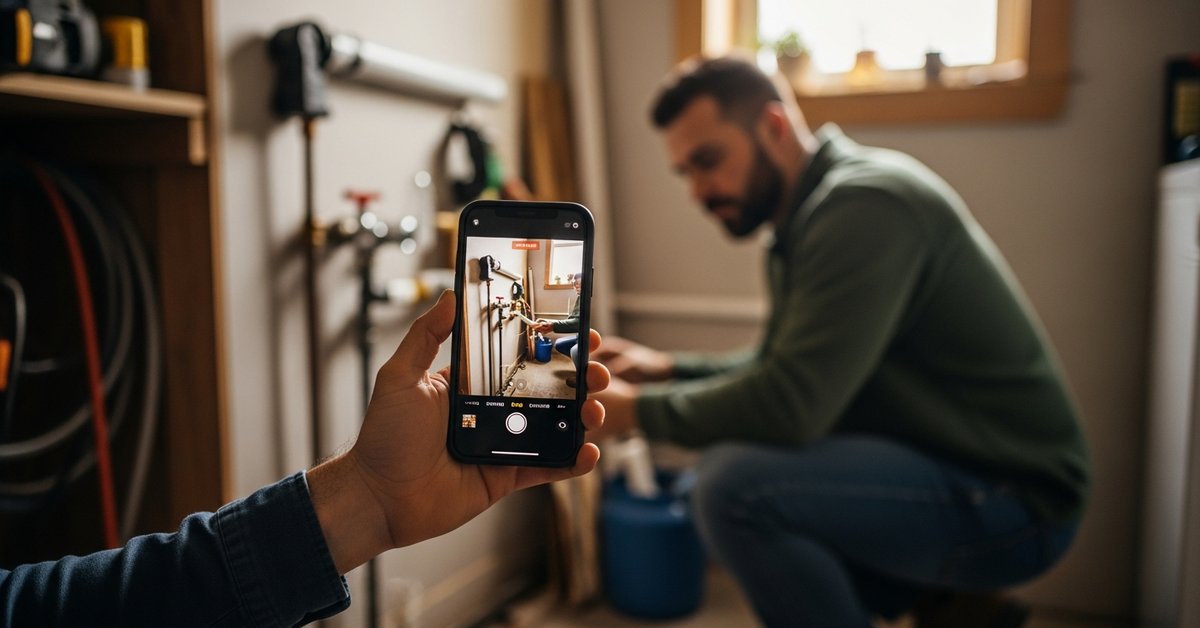


Ask 10 contractors why they're not on YouTube and you'll get the same 10 answers. "I don't want to be on camera." "I don't have time to edit videos." "I don't know what I'd even film." "That's for influencers, not for me."
That is exactly why YouTube is the most wide-open marketing channel in the trades right now.
74 percent of American adults use YouTube. They watch about 1 billion hours of it a day. Your customer was on it this morning before work. They'll be on it tonight after dinner. They've also been on it researching the exact problem you fix for a living. And almost none of your local competitors are showing up there.
The contractors who push past the camera-shy phase are quietly winning a platform their competitors are still scared of. Here's why YouTube is the opening, what to film, and how to start without buying a camera.
Should Contractors Be on YouTube?
Yes - and the timing has never been better. YouTube is the second-largest search engine in the world, owned by Google, and almost no local home-service businesses are actively using it. A contractor who puts in even minimal effort on the platform right now is stepping into a space their competitors have left completely empty. Videos rank on Google, build local authority, and compound in value for years - a single well-titled video can still pull leads half a decade after you filmed it.
Why YouTube Works for Contractors Specifically
Three things make YouTube different from Facebook, Instagram, and TikTok for the trades.
It's owned by Google. A video on YouTube can rank inside Google search, the video carousel on Google search results, your Google Business Profile, and AI Overviews. A single video gets pulled into four different surfaces at once. A Facebook post never sees daylight outside Facebook.
Search intent is built in. People search YouTube the way they search Google. "How to unclog a kitchen drain." "Why my AC won't turn on." "What does a roof inspection cost in [city]." Every one of those is a homeowner about three steps away from calling someone like you. The contractor whose face shows up in that video becomes the local expert before the phone ever rings.
It compounds. A Facebook post is dead in 48 hours. An Instagram reel is dead in two weeks. A YouTube video sits there for five years. The roofing inspection walkthrough you film today can still be pulling leads in 2031.
A small set of contractor channels has already proven the model. Mmplumber is at 274 million accumulated views. Word of Advice (HVAC) has a single video at 1.4 million views explaining why an AC won't start. DIY HVAC Guy is at 44 million combined views. None of these are marketing pros. They're working contractors who recorded what they already know.
The Numbers Behind Why Now Is the Time to Start
74 percent of US adults are on the platform. 1 billion hours of watch time per day. Around 70 percent of YouTube watch time now comes from algorithm recommendations rather than search, which means a good thumbnail and the first 15 seconds can put a brand-new channel in front of homeowners who never searched for it.
Here's the part most contractors miss. Almost no local home-service businesses are on the platform in any active way. Searches like "[your service] [your city]" usually surface one or two videos from out-of-state channels and a stack of national TV ads. The local map is empty. Whoever fills it first owns it.
The competitive math actually favors small shops over big agencies. The platform rewards honesty and watch time. A real contractor in a real truck on a real jobsite explaining a real problem holds attention. The polish is optional.
The 5 Videos Every Contractor Should Film First
Skip the strategy session. You need 5 videos in the next 30 days. Here's the starter list.
1. The Before-and-After
A 30-second clip. Wide shot of the problem, three or four mid-job shots, wide shot of the finished work. One sentence at the start about what the homeowner called you for. One sentence at the end about your shop and your city. This is the most-watched format in the trades.
2. The "How To" Your Customers Actually Search
Pick the question your office gets asked 5 times a week. "How often should I change my furnace filter." "What does a roof inspection actually check for." "Why is my water bill suddenly high." Film a 2-3 minute video answering it like you'd answer it for a friend. Title it with the question, word for word.
3. The "We See This All the Time" Warning Video
What's the mistake homeowners make that keeps costing them? The roof flashing they painted instead of replaced. The hose bib they didn't winterize. The breaker they kept resetting. Film a 1-2 minute video walking through what to look for. These rank high in search because they answer questions homeowners couldn't ask without context.
4. The Customer Story
Two-minute walkthrough of a recent job. The homeowner's words, your work, the result. Better than any testimonial that just sits on a page. Easy to make. Real. And if you want to stretch that same job even further, jobsite marketing is a strategy that turns one finished project into leads from the whole neighborhood.
5. The Jobsite Short
Pull out your phone, film a 30-second clip of something interesting on the job today, post it. No editing. No script. Just the work. This is what builds the algorithm momentum that makes everything else easier.
That's a starter library. None of it requires a studio. Most of it requires a phone, a tripod, and the willingness to talk to the camera the way you'd talk to a homeowner standing next to you.
What About Getting on Camera
Here's the part most contractors stall on. Nobody wants to watch themselves on video. Most people think they sound stupid. Most people think they look bad.
Your customers don't watch contractor videos for the polish. They watch to see if you sound like someone who knows the work. What builds trust is the hat, the truck logo behind you, the actual jobsite you're standing in, the way you point at the thing you're talking about and explain why it matters. That's what turns a video viewer into a phone call.
Watch any of the contractor channels that have crossed a million views. The host has a regular voice. The lighting comes from a jobsite. The audio comes from the phone. The reason it works is that the person on camera knows the trade.
You already know the trade. That's the part that takes 22 years to build, and you're already there.
Where This Connects to the Rest of Your Marketing
YouTube views are halfway to a lead. The views have to land somewhere that turns them into a call.
Every video description has a link to your website. Your website is mobile-friendly, fast, and has clear service pages that match what the video was about. Your Google Business Profile is fully built out, with photos, posts, and an active review pipeline. Your phone gets answered.
That's the foundation a YouTube channel pours into. Without it, the views are wasted reach. If your site isn't converting visitors yet, that's the first thing to sort out - getting traffic is only half the job. And if you're building out your broader online presence alongside video, backlinks for home service pros is a strong next read.
If you're ready to build the kind of digital foundation that turns YouTube views into real leads, Footbridge Media's contractor marketing program is built to connect all the channels that work together for home service businesses.
Download The Free YouTube Marketing Playbook By Footbridge Media
Frequently Asked Questions
No. The most successful contractor channels were built with a phone and a willingness to show up on camera. A basic tripod, decent lighting from a window or an open jobsite, and clear audio from your phone's built-in mic is enough to get started. Viewers in the trades aren't watching for production value - they're watching because the person on screen knows their stuff. Start with what you have and upgrade later if it makes sense.
It varies, but most contractors start seeing meaningful traction within 3-6 months of consistent posting. The first few videos build the foundation - the algorithm needs data before it starts recommending your content. The key is posting consistently and titling videos around real search terms your customers use. Unlike paid ads, the leads don't stop when you stop spending - a video you film today can still be pulling calls two or three years from now.
Yes - because YouTube is owned by Google, well-optimized videos can surface in Google search results, the video carousel, your Google Business Profile, and AI Overviews. That's four separate placements from one piece of content. A properly titled video targeting a local search term - like "furnace tune-up [your city]" or "roof inspection cost [your city]" - can show up where your competitors' websites aren't ranking at all.
You can - before-and-after clips, jobsite walkthroughs, and time-lapses work without a face on camera. But the data from the top-performing contractor channels is pretty clear: videos where someone explains the work in plain language outperform voiceover-only content. The face in the frame is what converts a viewer into a caller. Most contractors who push past the discomfort say it gets easier after the first two or three videos.
Consistency matters more than frequency. One solid video per week is a strong pace for a new channel. If that's too much given your schedule, two per month is still enough to build momentum over time. The biggest mistake is going hard for a month and then going dark - the algorithm responds to regular activity. Start at a pace you can actually maintain, batch film when you're on a good job, and use jobsite Shorts to fill gaps between longer videos.


About Aaron O'Hanlon
Aaron O'Hanlon is the CEO and Co-Founder of Footbridge Media, a digital marketing agency, specializing in the contracting industry. It is his mission to create awareness of marketing online to the home improvement industry and to educate, inform, and assist contractors in taking over their own online presence.