Your Contractor Website Looks Great - So Why Isn't the Phone Ringing?
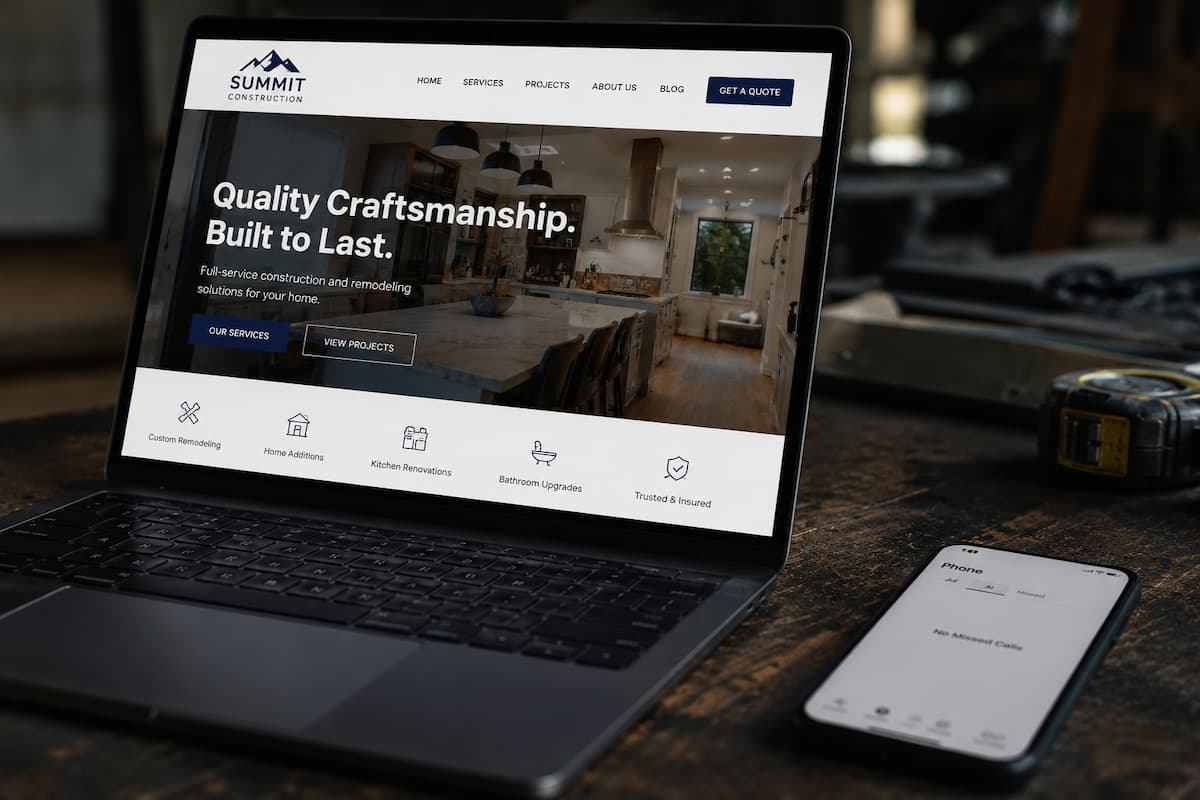


You paid good money for a new website. Maybe you hired a local designer, went with an agency, or built it yourself on one of those drag-and-drop platforms. Either way, when it went live, it looked sharp. Friends said it looked professional. You were proud of it.
Then the phone sat quiet.
Here's the thing - looking professional and generating calls are two completely different jobs. Most contractor websites are built to do only one of them. If you've been assuming a great-looking site is doing the marketing work for you, let's take a closer look at what's actually happening.
Why Does a Good-Looking Contractor Website Fail to Generate Calls?
A contractor website fails to generate calls when it's designed to impress visitors instead of converting them. The gap between a beautiful site and a call-generating site isn't about aesthetics - it's about whether the site makes it easy for someone to understand what you do, trust you, and contact you within the first few seconds of landing. Most sites are built to pass a visual inspection, not to guide someone toward picking up the phone.
Built to Impress vs. Built to Convert
Most web designers are trained to make things look good - and there's nothing wrong with that. A clean, modern site builds credibility. But design and conversion are two separate disciplines, and the person building your site may only have expertise in one of them.
Think about what "built to impress" actually looks like. You've seen these sites: a full-screen hero image showing a beautiful finished project, the company name and logo front and center, a tagline like "Quality You Can Trust," and a navigation menu with not a lot of content. The phone number is somewhere in the footer. The contact form is buried on a separate page. The portfolio is gorgeous. The phone doesn't ring.
Now think about what the visitor is actually experiencing. They searched for "HVAC repair near me" or "plumber in Pensacola" on their phone while standing in a hallway next to a leaking pipe. They clicked your link. They see a big beautiful image and a logo. They're not impressed - they're looking for a phone number and they can't find it. So they hit the back button and call your competitor.
Conversion is about removing friction, not adding features. Every extra click between a visitor and your phone number is a lead you might be losing.
Here's how the two approaches compare side by side:
| Built to Impress | Built to Convert |
|---|---|
| Logo and tagline dominate the top of the page | Phone number is large, prominent, and clickable in the header |
| Full-screen hero image with no supporting information | Above-the-fold area answers: what you do, where you serve, and how to call |
| Contact form buried on a separate page | Contact options appear multiple times throughout the page |
| Portfolio gallery is the centerpiece | Reviews and trust signals appear early and often |
| Designed to look great on the designer's desktop | Built mobile-first, since that's where most visitors arrive |
What a Call-Generating Website Actually Does
Let's take a look at what separates a website that gets calls from one that just looks good. These aren't complicated changes - but they require someone to build the site with conversion as the actual goal, not just aesthetics.
The phone number is unavoidable. On a converting website, the phone number lives in the header - large, visible, and clickable on mobile. It shows up again at the bottom of the page, too. You're not making anyone hunt for it. When someone is ready to call, they call.
The first screen answers three questions. Before a visitor scrolls a single pixel, they need to know: What do you do? Do you serve my area? How do I reach you? If your website doesn't answer those three questions above the fold - in the first screenful of content - you're losing people before they even have a chance to be impressed.
Trust signals appear early and are specific. Generic claims like "family owned" or "quality work" don't close calls. Real reviews do. Whether you're a plumber, an electrician, or a landscaper, having recognizable review platform badges - Google, BBB - with real numbers and recent dates tells the visitor something specific: other people in their area trusted this company and were happy. That's what moves the needle. Getting those reviews consistently is its own conversation, but they have to show up on the site where visitors can actually see them.
One clear call to action per screen. Not five options. Not a mega-menu. Not three different buttons competing for attention. A converting website picks a primary action - call now, book online, get a free estimate - and makes that the obvious next step. Confusion kills conversion.
Mobile is the primary experience. Most contractor searches happen on a phone. If your site was built on a desktop and "optimized for mobile" as an afterthought, visitors are probably scrolling past a jumbled layout and tapping a phone number that's too small to hit accurately.
The Hidden Technical Layer Most Contractors Never Think About
Even if your site looks great and is set up to convert, there are technical factors underneath the surface that can quietly kill your results. This is the part most contractors never hear about until something is already going wrong.
Site speed matters more than you might expect. A slow-loading site loses visitors before they ever see your content. Most people on a mobile connection won't wait more than a few seconds on a slow page - especially when they're in a hurry to find a contractor. And it's not just about the visitor experience. Google factors page speed into local search rankings. That's not a guess - that's taken directly out of Google mouth - specifically on the Google Search Central Blog.
Your site has to be found before it can convert anyone. A beautiful, high-converting website that ranks on page two or three of Google is essentially invisible to the people searching for your services. SEO and design have to work together from the beginning - not in separate silos. Your content, your page structure, and how your site is built all factor into whether Google puts you in front of someone searching for your services right now.
Local signals have to be clear. Your site should speak directly to the area you serve. Generic content - "we provide quality plumbing services" with no city, county, or neighborhood specifics - doesn't rank well for local searches and doesn't resonate with someone who wants to know if you actually service their neighborhood. Service area pages, local references throughout your content, and consistent business information across your online presence all work together here. NAP consistency is part of that foundation.
Common Mistakes That Kill Your Website's Performance
Most of the time, a website that isn't generating calls has one or more of these problems beneath the surface. Sound familiar?
- Judging the site by desktop when most visitors are on mobile. The desktop and mobile versions of a site can look completely different. A layout that's clean and professional on a 27-inch monitor may be a jumbled mess on an iPhone. Always check your site on an actual phone - on a cellular connection, not WiFi - before assuming it's working the way you think it is.
- Letting the designer lead on layout and assuming they know best. A designer's job is aesthetics and brand communication - and that's a real, valuable job. But conversion architecture is a separate discipline. If no one on your website project was specifically responsible for making the site generate calls, that job probably didn't get done.
- Treating the website as a one-time build. A site that launched two or three years ago with no updates, stale content, and no review integration is quietly losing ground every month. Google favors active, updated sites. Visitors trust sites that look current. "Set it and forget it" is not a strategy - it's a slow leak.
These aren't irreversible problems - but they do require intentional effort to fix. If you want to dig into what a high-performing contractor site actually looks like from the ground up, our post on the five things every successful contractor website has is a good place to start. And if you're already getting traffic but struggling to turn visitors into leads, this piece on converting website traffic into calls gets into the specifics.
Your Website Is the Center of Everything
The bottom line is this: your website isn't just one part of your marketing - it's the center of all of it. When you run Google Ads, they send traffic there. When you build up your reviews, potential customers land there to make a decision. When someone finds you in a local search, they click through to your site. If the site doesn't convert, every other dollar you spend on marketing is working at half power.
This is why we build contractor websites differently at Footbridge Media. We've been doing this exclusively in the trades and home services space for over 20 years - and we've seen firsthand what separates a site that gets calls from a site that just gets compliments. Our core marketing program includes custom website design and hosting, ongoing content, SEO, and a dedicated marketing consultant - because a beautiful site with no performance behind it is just an expensive online brochure.
If your site looks great but the phone isn't ringing, something specific is broken - and it can be fixed. That's a problem worth solving.
Get A Contractor Marketing System, Built Just For Home Service Pros Like You
Frequently Asked Questions
Above the fold - the part of your website visible before scrolling - should answer three questions immediately: What do you do? Do you serve my area? How do I contact you? At minimum, this means a clear headline describing your service, your service area, a large and clickable phone number, and a primary call-to-action button. Logos, taglines, and imagery are secondary to these conversion elements.
Mobile optimization is critical - not optional. The majority of local home service searches happen on smartphones, often by someone in an urgent situation who needs a plumber, electrician, or HVAC tech right now. If your site is difficult to navigate, slow to load, or hard to read on a phone, you're losing those leads before they ever call. Your mobile experience should be treated as the primary version of your site, not an afterthought.
Industry best practice is under three seconds on a mobile connection. Pages that take longer to load see significantly higher abandonment rates - visitors leave before your content even appears. Page speed is also a direct factor in Google search rankings, particularly in local search. You can test your current speed for free using Google's PageSpeed Insights tool and get specific recommendations for improvement.
Yes. A static, never-updated website loses ground over time in two ways. Google increasingly favors sites with fresh, relevant content, and visitors who see outdated information lose confidence in your business. Regular content updates, current review integration, accurate service information, and active blog content all signal to both search engines and potential customers that your business is active, current, and trustworthy.
A website that looks good is designed to make a positive visual impression. A website that converts is designed to make a visitor take action - call, book, or request an estimate. The difference comes down to conversion architecture: a prominent phone number, clear calls to action, trust signals placed strategically, fast load times, and a mobile-first layout. A great-looking site without these elements can still fail to generate a single call.


About Chris Lonergan
Chris Lonergan has over 13 years of contractor marketing experience with Footbridge Media. With a background in web design, print design, content creation, and online marketing, Chris is focused on providing quality marketing and business solutions in the construction and service industries - helping small business owners to more efficiently manage their companies and grow their operations.
Chris Lonergan has previously contributed to and/or been featured in PM Magazine (Plumbing & Mechanical | Contractors x Engineers), theNEWS (ACHR - Air Conditioning | Heating | Refrigeration), Turf Magazine (For Landscaping and Green Industry Professionals) Service Roundtable's blog, inPAINT Magazine, the SMB Marketing Agency Show, and the Green Industry Podcast. Chris is also a past SGI/CertainPath breakout session presenter.